Do Muslims Commit a Disproportionate Amount of Crime in the United States? A Look at the Facts
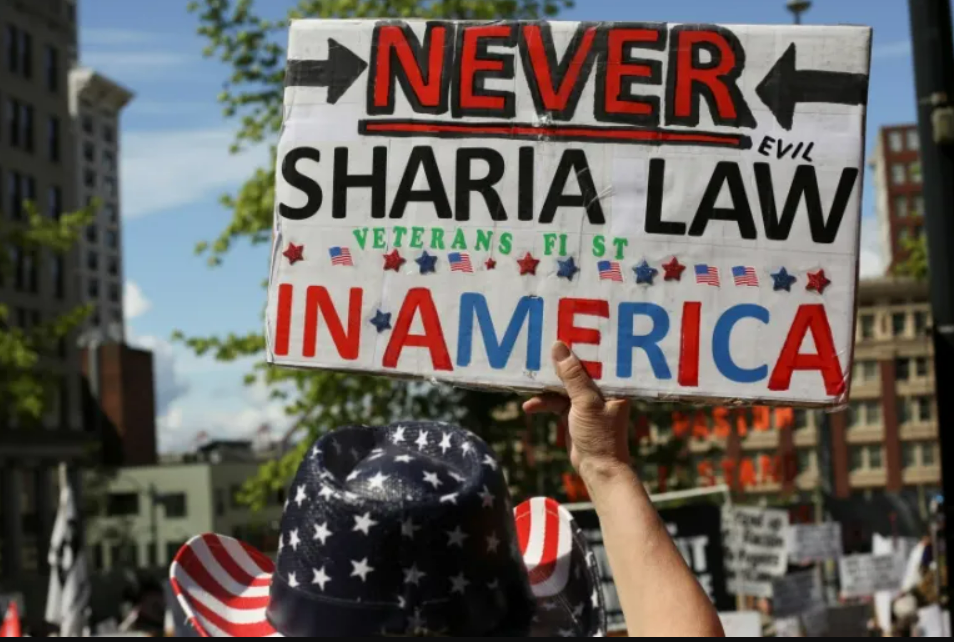
In April of 2023, I gave an interview with Turkish media about the amount if “Islamophobia” in the United States. The journalist with whom I was speaking was surprised to hear that, in my opinion, “Islamophobia” had significantly declined in the US — especially since the days post-9/11.
Well, just how things have changed! While I stand by my statement at that time (which I think was correct), in hindsight in our post October 7th world, such a statement sounds as ridiculous as the label executive who turned down The Beatles because he felt that “guitar groups were on the way out”. Maybe trends were as they were at one time, but there is no telling how the future will unfold.
As it is now, I can’t open social media without some outlandish and inflammatory story about “shariah law” or some “Muslim” somewhere who committed some crime blown out of proportion and into a sensational pearl-clutching headline to sway the opinion of The Masses to turn against Islam and Muslim everywhere.
Of course this is a deliberate and coordinated disinformation attack against Islam. This is not a conspiracy theory. We have articles, interviews, and headlines about Certain People who have become very unpopular due to Certain Events in the Middle East — certainly since October 7th, but ongoing since 1948. Not being able to win the hearts and minds of the American people while a daily massacre and genocide is being perpetuated for all to see on social media, They have instead switched tactics and are instead trying to divert attention towards the old reliable tactic of hatred, distrust, and scapegoating towards Muslims — many of whom are quiet, hard-working American citizens here in the United States, and whose taxes go towards funding such an information war (and, indeed, genocide) carried out by a foreign nation.
So now, when I open my social media, I am bombarded by news stories about even the smallest crimes committed by “Muslims” “infiltrating” American, of the dreaded onslaught of “shariah law” against American communities and “replacing” the Constitution, and so on. The coordinated effort seeks to paint Muslims in America as barbaric, violent, hateful, and dangerous people — the dark Oriental foe which all good, decent, mild-mannered, Christian-folk in America must fear — if not actively fight against.
All of a sudden, the inevitable take-over of America by drag-queens in libraries and men using women’s bathrooms has, overnight, been replaced with open Islamic Theocracy which, any day now, will rule over every small town in places like Iowa, Texas, and middle America. (As we know, the big blue-state cities like New York are already far gone down this path of Islamo-fascism… and also, oddly, so-called Communism. But that’s a story for another day.)
The mainstream and social media are not really reporting news any longer. They have long been the propaganda wing of the State. (Trump supporters agreed with me about this in 2020… so what happened?) Their job is to steer public opinion in the direction that they want. And so, whenever a sensational crime hits the news and the suspect turns out to be Muslim — or even simply assumed to be Muslim — American social media repeats the same narrative: “Why do Muslims commit so much crime? They must be expelled!” It is the same logic that prejudiced societies have used for centuries: an individual crime becomes a stand-in for an entire community.
But in a nation of more than 330 million people, what does reliable research tell us? Do Muslim Americans commit a disproportionate amount of crime? Do they fill our prisons at unusual rates? Are Muslims the dangerous barbarians within the gates that we are warned about and told to fear?
The best available evidence offers a clear conclusion:
No, Muslims in the United States do not commit crime at a disproportionate rate.
In fact, several measurable indicators point in the opposite direction. Below I will explore what the data actually show, why the myth persists, and what factors truly predict criminal behavior.
What Does the Research Say?
Because religion is not a standard variable in police or judicial records, researchers cannot simply look up “crime rates by religion” the way they can by age, gender, or race. However, reliable indirect data exist, and the most comprehensive analyses point to one consistent result: there is no evidence that Muslims commit more interpersonal or violent crime in the United States.
A recent peer-reviewed study published in the Journal of Interpersonal Violence found no measurable relationship between being Muslim and committing violent stranger crime in the U.S.¹
Additionally, immigrants commit significantly less crime than the U.S.-born population, and more than half of U.S. Muslims are immigrants or children of immigrants.² This is consistent with a long line of criminological evidence showing that immigration generally correlates with lower rates of crime across multiple generations.
Globally, homicide data further challenge assumptions: countries with majority Muslim populations tend on average to have lower homicide rates than countries with very low Muslim populations.³ This does not mean Islamic belief “causes peace,” but it undermines the notion that Islamic identity correlates with criminality.
Finally, comparative sociological studies suggest that in some Muslim societies, strong communal norms and religious expectations can stabilize families and reduce certain forms of criminal behavior.⁴ Religion, when functioning as a binding social ethic, often restricts harmful behavior rather than enabling it.
So Why Does the Myth Persist?
- Disproportionate Media Coverage
Crimes attributed to Muslims — especially those framed as terrorism — receive dramatically more press attention. A quantitative media analysis found that attacks committed by Muslim perpetrators receive 357% more coverage than similar attacks by non-Muslims.⁵ Visibility creates distortion, and this is a distortion which is done on purpose and with a clear goal in mind. If, for example, crime in the southside of Chicago were covered with the same coverage of crime committed by “Muslims”, the south of Chicago would probably already be carpet-bombed and under military rule due to propaganda and misguided public outcry.
2) Prison Myths and Chaplain Surveys
Some viral claims suggest that Muslims are overrepresented in American prisons (often cited as “9% of inmates”). But this figure comes from surveys of prison chaplains, not from official state crime records, and includes thousands of inmates who convert to Islam after incarceration.⁶ As such, these estimates cannot be used to argue disproportionate criminality.
3) Confusing Correlation and Causation
Crime correlates strongly with variables such as poverty, neighborhood environment, and educational access — not religious identity. When religion is singled out, it often masks systemic socioeconomic factors.
4) Historical and Political Anxiety
Like previous waves of anti-Irish, anti-Italian, and anti-Japanese sentiment, anti-Muslim suspicion is not a data problem but a cultural one. Societies often treat religious or ethnic minorities as “outsiders,” blaming them for broader anxieties.
What About Muslim-Majority Countries?
Critics sometimes point to violence in certain Muslim-majority regions, assuming religious causation. Yet homicide data globally do not align with this assumption. Many Muslim-majority countries, from Indonesia to Saudi Arabia, have significantly lower homicide rates than the United States.⁷
Variations track more strongly with poverty and inequality, political stability, war and conflict, corruption, and policing institutions.
Religion is not the determining variable — social structure is.
What Can We Honestly Say?
It is true that individual Muslims commit crimes, just as individuals from every group do. No one is arguing that all Muslims are angels or that crime magically disappears when someone takes the shahada. Human beings — all of them — are capable of great virtue and great evil. But the leap from individual wrongdoing to collective guilt is both statistically illegitimate and morally reckless. It is the hallmark of societies in decline, societies that need scapegoats to distract from deeper structural problems.
And that is precisely what is happening in the United States.
Crime in America is not driven by Islam, nor by Judaism, nor by Christianity, nor by atheism. Religion alone is a poor predictor of almost anything, much less violent crime. The actual sociological and criminological determinants are painfully mundane:
- poverty,
- lack of opportunity,
- unstable housing,
- inadequate education,
- trauma,
- broken families,
- systemic inequality.
When a society refuses to address these systemic issues, it must invent an enemy. The scapegoat is never chosen randomly. It is always someone already seen as “different,” “other,” or “foreign.” For over twenty years, that has been Muslims.
The truth is that the United States has a crime problem because it has an inequality problem, a poverty problem, a racism problem, a mental health problem, a lack-of-community problem, and, increasingly, a media manipulation problem. Religion barely registers compared to any of these. But blaming Muslims is easier than confronting complicated systemic rot.
And once again… blaming Muslims is the entire goal and plan in order to deflect from the crimes and atrocities committed daily by America’s “greatest ally”: Israel.
And so the manufactured hysteria continues.
In political language, this tactic has a long pedigree. When a nation or its allies are engaged in policies that are morally indefensible, the easiest way to silence moral scrutiny is to manufacture an external threat. Colonization requires a “barbarian.” Genocide requires a “terrorist.” Empires cannot function without a constantly rotating list of monsters. The target changes from decade to decade, but the logic remains unchanged.
Today, Muslims have once again been drafted into the role.
But the facts simply do not cooperate with the narrative. Muslims are not invading the United States. They are not instituting parallel criminal networks. They are not plotting to overthrow the Constitution. They are working, studying, raising families, paying taxes, building small businesses, and trying to live ordinary American lives while being treated as though they are an occupying army.
The real data is boring. It does not trend on social media. It tells a simple, uncontroversial story: Muslims are not disproportionately criminal. They are made disproportionately visible when they commit crimes — because it feeds a political purpose. And when propaganda replaces statistics, when prejudice substitutes for analysis, when fear displaces truth, society ceases to pursue justice.
A healthy and morally secure country does not build its identity on scapegoats. It does not require a villain in order to function. It does not need to terrorize minorities to comfort its majority. If the United States wishes to call itself a land of freedom and law (and not to mention a Christian country), then it must accept a basic reality:
Muslims are not a threat to American safety.
Our prejudices are.
And until we learn to distinguish reality from propaganda, data from hysteria, and actual crime from weaponized misinformation, we will continue to punish the innocent and ignore the conditions that create violence in the first place. This is, in a sense, America’s beloved “anarcho-tyranny” which was so perfectly manifest in 2020: the real criminals walk free, while the everyday, average American is treated like a thug.
That is not patriotism. This is not ‘virtue’. This is not a Christian ‘crusade’ or holy war.
This is manipulation. Plain and simple. And the American people are all taken along for the ride. And meanwhile, none of the problems of the United States are being solved. They only get worse, while the powers-that-be simply aim at perpetuating the problems they themselves manufacture.
The enemy is, indeed, within the gates. But we are instructed to fixate on a phantom menace at the border, in the mosque, on TikTok, or in our neighborhoods. Anything to ensure we do not look behind the curtain; anything to make certain we never ask who benefits from this fear. The question of “Muslim criminality” is not about Muslims. It is about power, propaganda, and the oldest political trick in the world: inventing villains so the real ones can walk free.

- Daniel Koehler et al., “Interpersonal Stranger Violence in the United States: Testing for Religiosity Effects,” Journal of Interpersonal Violence 34, no. 22–23 (2019): 1–26.
- American Immigration Council, “Debunking the Myth of Immigrant Criminality,” 2021, https://www.americanimmigrationcouncil.org/fact-sheet/debunking-myth-immigrants-and-crime.
- “Islam and Violence,” Wikipedia, citing United Nations Office on Drugs and Crime (UNODC) data, accessed December 2025.
- Ahmad R. Serajzadeh, “Islam and Crime: The Effects of Religious Affiliation on Criminal Behavior,” Journal of Iranian Studies 4 (2002): 111–131.
- Erin Kearns, Allison Betus, and Anthony Lemieux, “Why Do Some Terrorist Attacks Receive More Media Attention Than Others?,” Justice Quarterly 36, no. 6 (2018): 985–1022.
- Michael Rocque, “Religion in American Prisons,” in Oxford Handbook of Prisons and Imprisonment, ed. John Wooldredge (Oxford: Oxford University Press, 2021).
- United Nations Office on Drugs and Crime (UNODC), Global Study on Homicide (New York: United Nations, 2019).
If you like this content, please consider a small donation via PayPal or Venmo. I am currently studying Islam and the Arabic language, and any donation — however small! — will greatly help me to continue my studies, my work, and my sustenance. Please feel free to reach me at saidheagy@gmail.com.
Thank you, and may God reward you! Glory to God for all things!